
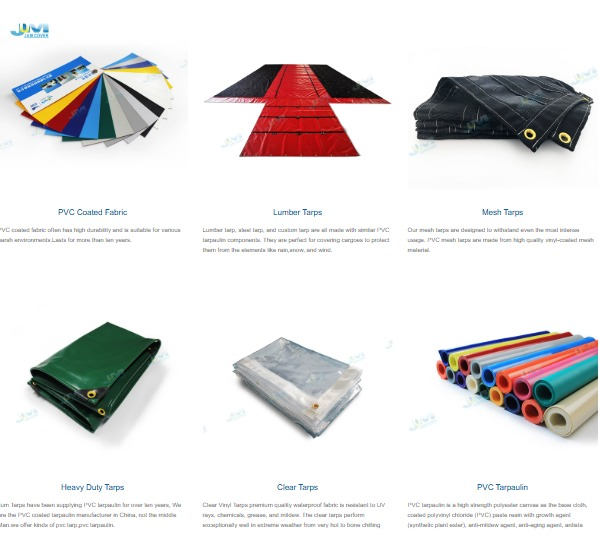
The global industrial fabric market is evolving rapidly as businesses increasingly prioritize environmental responsibility, product performance, and technological advancement. As industries such as transportation, agriculture, construction, logistics, and outdoor advertising continue to expand, the demand for durable and sustainable tarpaulin solutions is growing significantly. In response, every modern PVC Tarpaulin Manufacturer is embracing innovative technologies and sustainable practices to remain competitive in a changing marketplace.
Sustainability is no longer an optional business strategy. Customers, governments, and industry stakeholders expect manufacturers to reduce environmental impacts while delivering high-quality products. Companies like Jumtarps are leading this transformation by integrating advanced manufacturing processes, eco-friendly materials, and innovative product development into their operations.
The Rising Importance of Sustainability in the Tarpaulin Industry
Environmental concerns have become a major driving force across manufacturing sectors. A PVC Tarpaulin Manufacturer today must balance durability, cost-effectiveness, and sustainability to meet market expectations.
Traditional PVC products have long been valued for their strength, weather resistance, and versatility. However, increasing awareness regarding waste management and carbon emissions has encouraged manufacturers to adopt greener production methods. Sustainable manufacturing practices help companies reduce environmental footprints while enhancing brand reputation and customer trust.
Modern consumers and industrial buyers increasingly prefer suppliers that demonstrate a commitment to environmental stewardship. This shift is encouraging manufacturers to rethink raw material sourcing, production efficiency, and product lifecycle management.
Eco-Friendly Raw Materials and Formulations
One of the most significant innovation trends influencing every PVC Tarpaulin Manufacturer is the development of environmentally friendly raw materials.
Manufacturers are investing in formulations that minimize harmful additives and reduce volatile organic compound emissions. Phthalate-free plasticizers, lead-free stabilizers, and low-toxicity coating technologies are becoming standard across premium product lines.
Many companies are also exploring bio-based plasticizers derived from renewable resources. These alternatives help reduce dependence on fossil fuels while maintaining the flexibility and durability required for industrial tarpaulin applications.
Jumtarps, like many forward-thinking manufacturers, recognizes that sustainable material innovation is essential for long-term industry growth and customer satisfaction.
Recycling and Circular Economy Initiatives
The concept of a circular economy is reshaping manufacturing worldwide. A responsible PVC Tarpaulin Manufacturer is increasingly implementing recycling programs to reduce waste and maximize resource efficiency.
Production scraps generated during manufacturing can often be collected, processed, and reused in secondary applications. Advanced recycling technologies enable manufacturers to recover valuable materials and minimize landfill disposal.
Some manufacturers are introducing take-back programs that allow customers to return used tarpaulins for recycling or repurposing. This approach extends product lifecycles while reducing environmental impacts.
Circular manufacturing models not only support sustainability goals but also improve cost efficiency and strengthen supply chain resilience.
Energy-Efficient Manufacturing Processes
Energy consumption represents a major operational expense for any PVC Tarpaulin Manufacturer. Consequently, energy efficiency has become a critical area of innovation.
Modern manufacturing facilities are adopting energy-saving equipment, automated production lines, and intelligent monitoring systems to optimize resource usage. High-efficiency coating machines, advanced calendaring technologies, and automated quality control systems significantly reduce power consumption.
Additionally, many manufacturers are investing in renewable energy sources such as solar power to reduce greenhouse gas emissions. Smart factory technologies allow real-time monitoring of energy performance, helping companies identify opportunities for continuous improvement.
Jumtarps and other industry leaders understand that improving energy efficiency benefits both the environment and overall operational profitability.
Smart Manufacturing and Industry 4.0
Digital transformation is revolutionizing the operations of every PVC Tarpaulin Manufacturer. Industry 4.0 technologies are enabling greater precision, efficiency, and flexibility throughout the production process.
Automation systems powered by artificial intelligence and machine learning can optimize manufacturing parameters, reduce defects, and improve product consistency. Sensors integrated throughout production lines provide real-time data on temperature, coating thickness, fabric tension, and equipment performance.
Predictive maintenance technologies are also gaining popularity. By analyzing machine performance data, manufacturers can anticipate equipment failures before they occur, minimizing downtime and reducing maintenance costs.
These smart manufacturing capabilities allow companies to produce higher-quality products while reducing waste and maximizing resource efficiency.
Development of High-Performance PVC Tarpaulin Products
Innovation is extending beyond manufacturing processes to product design itself. A competitive PVC Tarpaulin Manufacturer continuously develops advanced products tailored to evolving customer requirements.
Modern PVC tarpaulins now offer enhanced properties including:
UV Resistance
Advanced coatings improve resistance to ultraviolet radiation, extending product lifespan in outdoor environments.
Flame Retardancy
Specialized formulations enhance fire safety for applications in transportation, construction, and industrial settings.
Antifungal and Antibacterial Properties
Protective treatments prevent microbial growth, making tarpaulins suitable for agricultural and hygienic applications.
Enhanced Tensile Strength
Innovative reinforcement technologies increase durability while reducing overall material weight.
These product enhancements enable manufacturers like Jumtarps to serve diverse industries with specialized solutions.
Customization and Customer-Centric Innovation
Customer expectations are becoming increasingly sophisticated. Today’s PVC Tarpaulin Manufacturer must provide customized solutions that address specific operational requirements.
Digital design technologies enable rapid prototyping and efficient customization. Customers can specify dimensions, colors, thicknesses, printing options, and performance characteristics according to their unique applications.
Customization not only improves customer satisfaction but also creates new market opportunities across sectors such as logistics, agriculture, architecture, event management, and advertising.
Manufacturers that prioritize customer-centric innovation are better positioned to establish long-term business relationships and strengthen market presence.
Sustainable Supply Chain Management
Sustainability extends beyond factory operations. A responsible PVC Tarpaulin Manufacturer must ensure that environmental and ethical standards are maintained throughout the supply chain.
Manufacturers increasingly collaborate with suppliers that adhere to responsible sourcing practices, environmental regulations, and quality standards. Transparent supply chains improve traceability, reduce risks, and support corporate sustainability objectives.
Digital supply chain management systems further enhance visibility, allowing manufacturers to monitor inventory, optimize logistics, and reduce transportation-related emissions.
Companies like Jumtarps recognize that sustainable supply chain practices are essential for maintaining competitiveness in international markets.
Future Outlook for PVC Tarpaulin Manufacturers
The future of the tarpaulin industry will be defined by sustainability, digitalization, and continuous innovation. Every successful PVC Tarpaulin Manufacturer must adapt to changing environmental regulations, evolving customer preferences, and technological advancements.
Manufacturers that invest in eco-friendly materials, smart production technologies, recycling initiatives, and high-performance products will gain significant competitive advantages. Sustainability is no longer merely a trend—it has become a fundamental business requirement.
As global demand for durable and environmentally responsible industrial fabrics continues to rise, innovative companies such as Jumtarps are well-positioned to lead the next generation of manufacturing excellence. By combining sustainability with cutting-edge innovation, the industry can create long-lasting value for customers, businesses, and the environment alike.